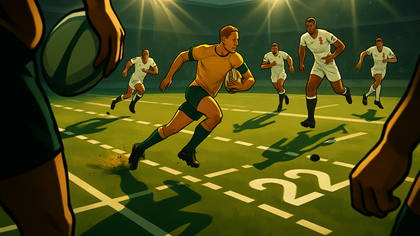
Reflecting on his rugby journey, Giteau's first final appearance was off the bench in 2003 against England. Despite a strong performance by Australia, they were narrowly defeated 20-17, with Jonny Wilkinson sealing the victory for England with a famous drop goal. However, it was the 2015 final, after Australia had modified their selection rules allowing Giteau's return, that he found particularly disheartening. This match saw Australia fall 34-17 to a dominant All Blacks team, a stark contrast to their victorious 2003 semi-final against the same opponent.
"I came into a really tested team that just knew how to win," Giteau remarked on the All Blacks’ YouTube channel. "They had every trophy at that point. So you go into a game, and you’re expected to win, and that World Cup we’d done exactly that. We’d won every game."
The defeat in 2015 lingered in his mind not just because of its immediacy but because it signaled the end of his World Cup journey. "The big hurdle was obviously New Zealand at the time, we thought. We were able to beat them in the semi," Giteau recalled about the lead-up to the 2015 final.
Despite the past defeats, Giteau held the 2015 All Blacks in high regard, predicting that most of the starting lineup would be recognized in the World Rugby Hall of Fame. "I reckon out of the 15 players that were starting, 13 of them will make the Hall of Fame. Like, it was a crazy team that they had," he explained, reflecting on the extraordinary talent of the New Zealand team they faced.
Even years after the event, Giteau finds himself revisiting key moments of that final, pondering what could have been. "There are still moments in games that you think about where we potentially could have got it done. I don’t know. There are just certain moments that I’d still replay from when we’re playing where I felt that we had our opportunities, but they were too good. They just knew how to close out a game. They knew how to win," he admitted.
Giteau's retrospective provides not only a glimpse into the highs and lows of professional sports but also underscores the emotional and mental resilience required by athletes at the highest level. His candid reflections reveal the profound impacts of pivotal games, particularly when they mark the end of a significant chapter in a player's career.
The contrast in Giteau's experiences in 2003 and 2015 highlights the evolving challenges and pressures faced by athletes over time, shaped by both personal growth and changes within the sport itself. His journey through these two World Cup finals encapsulates not just individual matches but the broader narrative of rugby's relentless competition and the thin margins that define success and failure on the world stage.
As Giteau looks back on these moments, his story resonates with upcoming athletes and fans alike, serving as both a lesson in sportsmanship and a beacon of inspiration, demonstrating that every game, win or lose, enriches the legacy of a player.